Introduction: rethinking “solubility” in farming
Farmers have long judged fertilizers and soil improvers by how fast they dissolve, believing that the faster and more completely a product dissolves, the sooner the plant can feed. In soil science, however, the fastest-dissolving fertilizer is usually also the one that is wasted fastest and in the largest amounts.
Products that dissolve 100% instantly tend to leach below the root zone with rain and irrigation, volatilise, precipitate or become fixed in the soil before the plant has a chance to take them up.
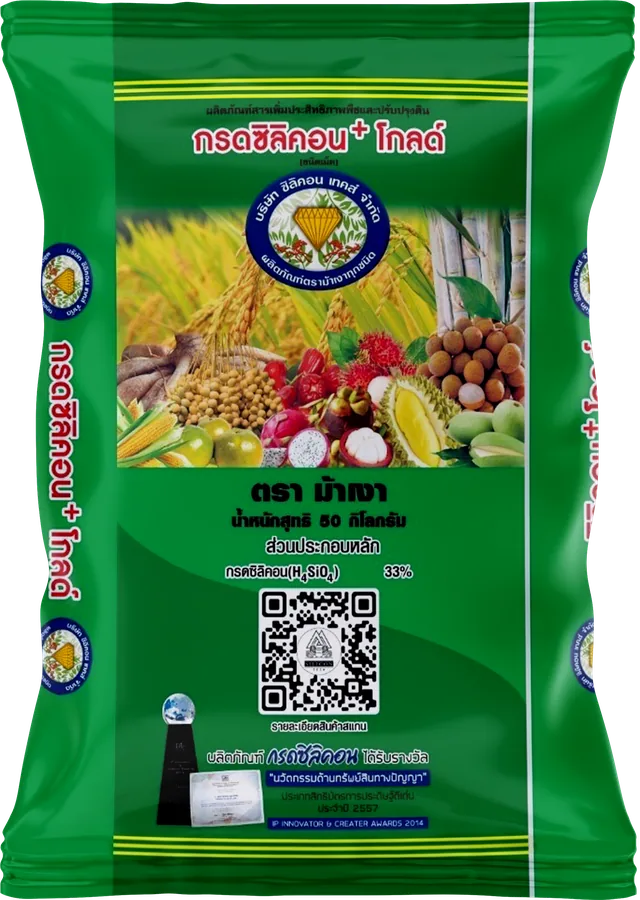
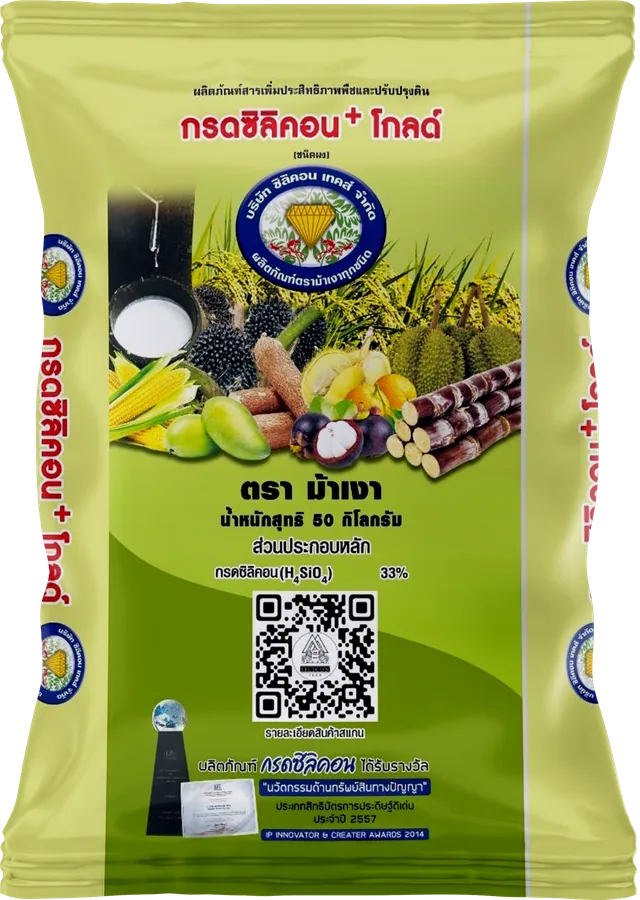
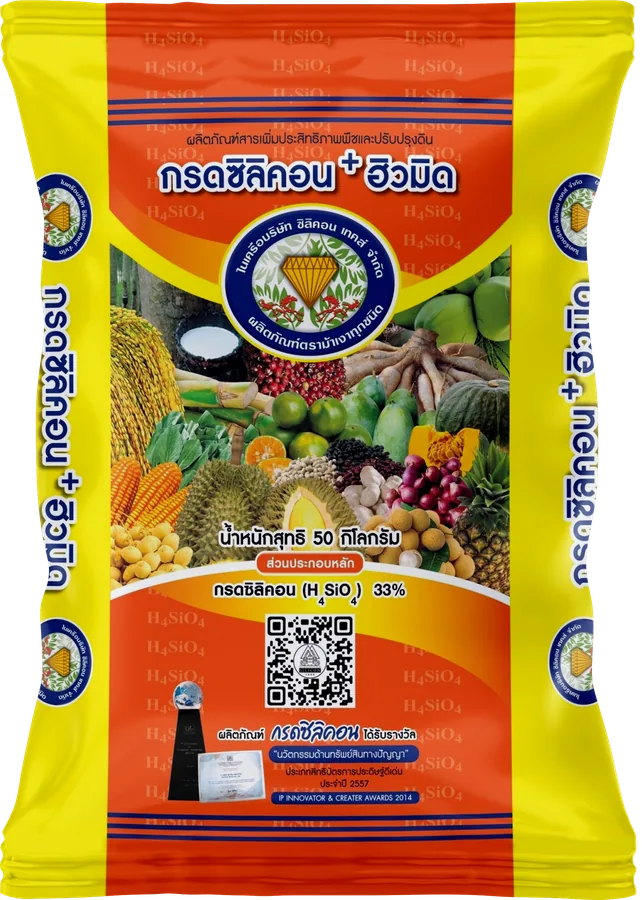
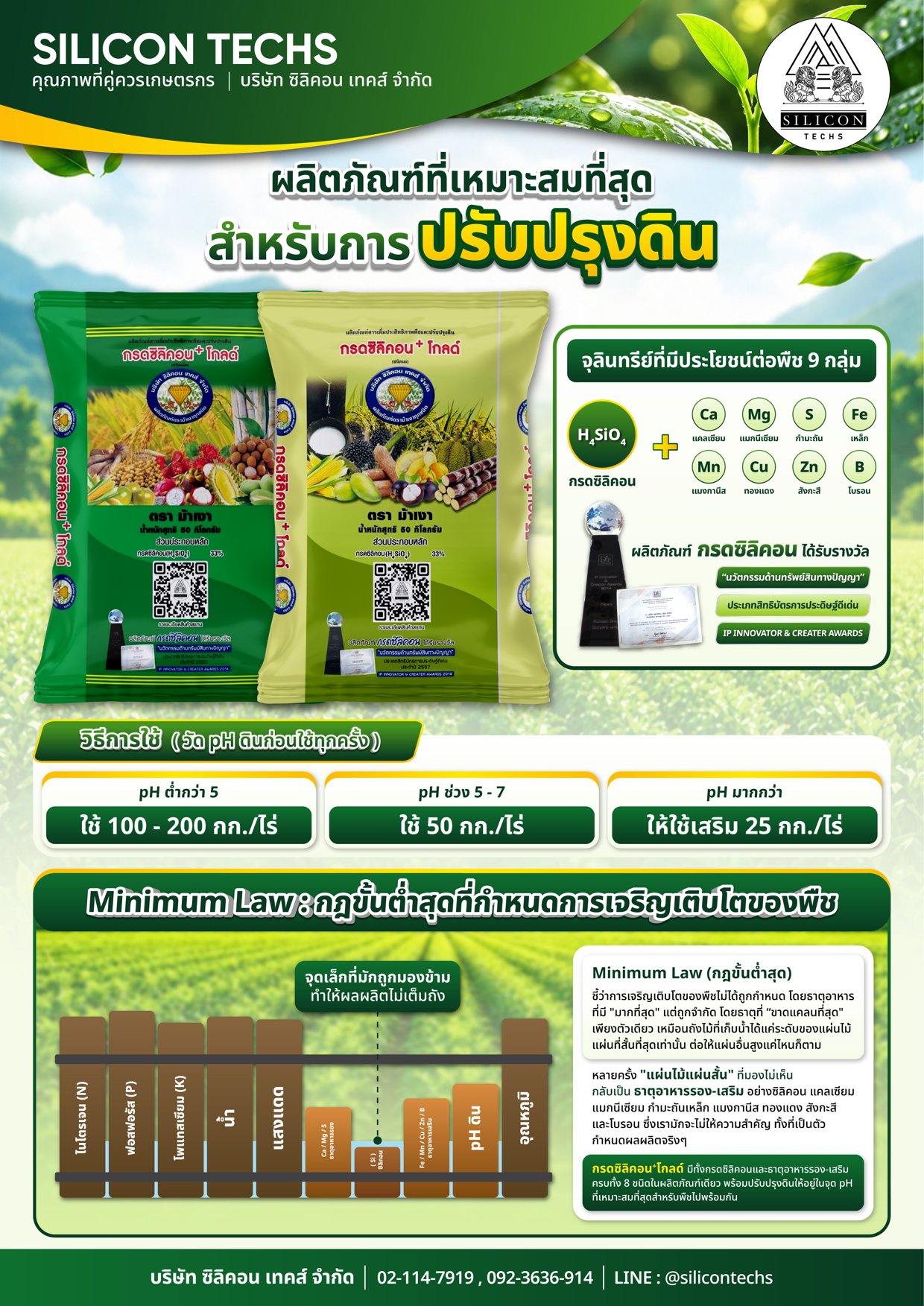
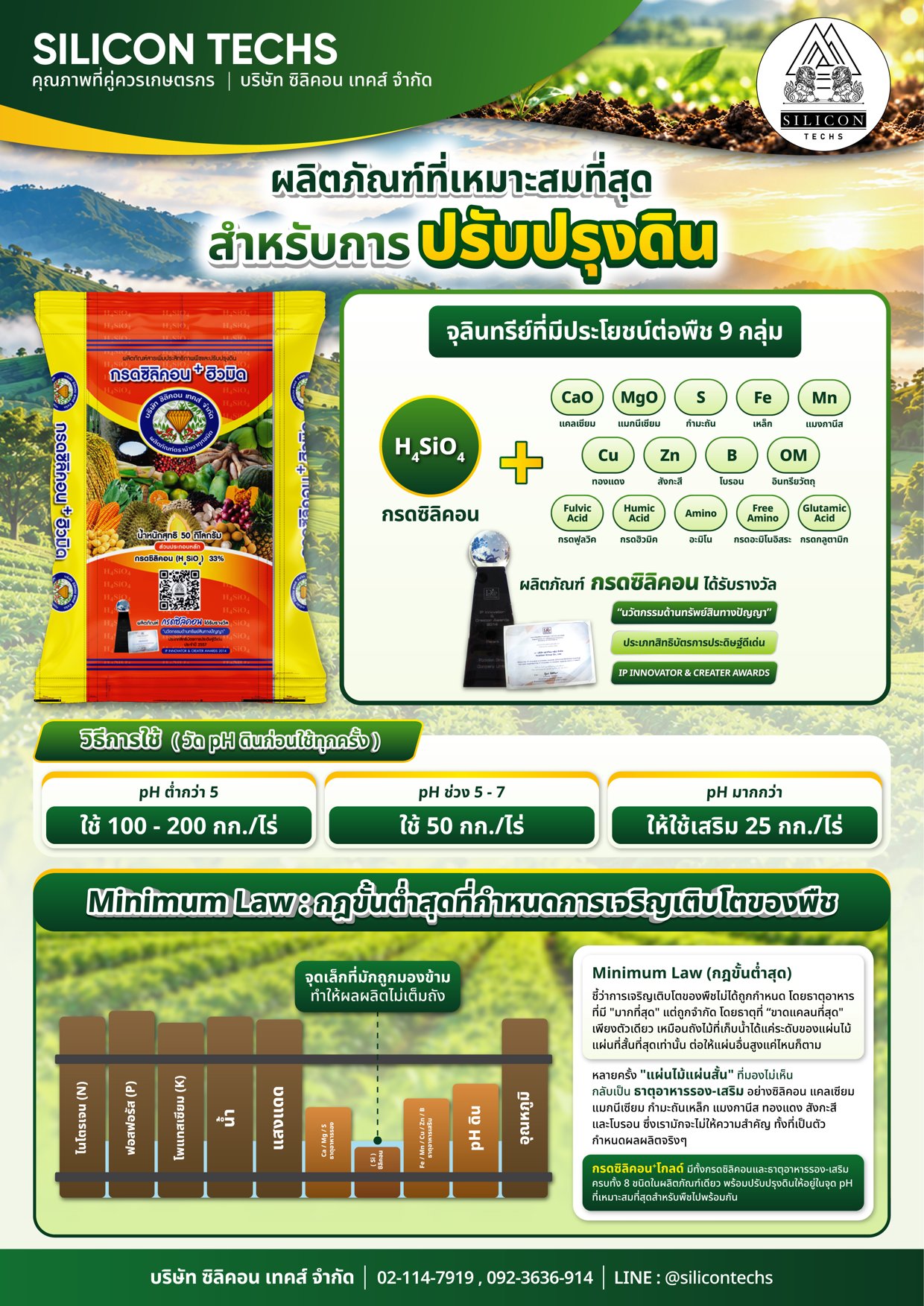
Silicon Techs Co., Ltd. therefore developed the “Orthosilicic Acid+” range on a completely new plant-nutrition engineering concept, deliberately setting water solubility at no more than 10%. This turns each granule from fertilizer that dissolves and washes away into a targeted, controlled-release system that works with plant behaviour and soil chemistry, through five scientific pillars.
1. Preventing leaching losses (anti-leaching mechanism)
- Stable in plain water: with water solubility below 10%, the main particles don’t break down and wash off when they meet irrigation or rain.
- They don’t sink below the roots: particles stay in the topsoil, where roots are densest, so nutrients aren’t lost to groundwater.
2. Responding to acidic soil: balancing pH and detoxifying metals (acid-responsive, self-regulating buffer)
In acidic soils nutrients are often locked up and roots are damaged by toxic metals. Orthosilicic Acid+ was designed specifically for this.
- Dissolves on contact with acid (acid-responsive release): silicate and dolomite minerals react with hydrogen ions (H+) in acidic soil, neutralising acidity and raising the pH around the roots (rhizosphere) to the range where plants take up nutrients best (pH 6.0–6.5).
- Automatic shut-off (chemical equilibrium): once the soil there is neutralised (H+ falls), dissolving stops or slows in line with chemical equilibrium. The remaining particles stay as a reserve, ready to correct acidity again when conditions change.
- Aluminium and iron detoxification: silicon released as monosilicic acid (H4SiO4) binds free aluminium (Al3+) and iron (Fe2+), which are toxic to plant cells in acidic soil, forming non-toxic hydroxy-aluminosilicates so root tips can grow freely without curling.
3. In non-acidic soil: how do plants keep feeding?
If the soil pH is already normal or neutral, plants still receive nutrients in full through three natural biological and chemical mechanisms.
Root exudates
Even when the bulk soil is neutral, roots constantly pump out protons (H+) and natural organic acids — such as citric, malic and oxalic acid — within 1–2 mm of the root hairs to dissolve soil minerals. Orthosilicic Acid+ granules dissolve readily in these organic acids (citric-acid soluble), so when a root touches a granule, it dissolves right at that spot.
Demand-driven release
The more a plant grows and needs nutrients, the more organic acid its roots release, so the granules feed the roots in step with the crop’s needs (nutrient synchronisation).
Microbial respiration and hydrolysis
Soil microbes release carbon dioxide (CO2), which combines with soil moisture to form weak carbonic acid (H2CO3) that slowly dissolves the granules. Natural hydrolysis gradually converts silicate into monosilicic acid (H4SiO4), which dissolves and is readily absorbed across a wide pH range, from 4.0 to 8.0.
4. Biostimulants and natural chelators (humic, fulvic and amino acids)
Laboratory analysis confirms that the Orthosilicic Acid+ range contains humic acid, fulvic acid and amino acids, which drive how the products work.
- Built-in chelation and nutrient carrier: fulvic and amino acids are small molecules that act as weak organic acids and natural chelating agents. They bind cations such as calcium (Ca2+) and magnesium (Mg2+) inside the granule and carry them across root-cell membranes, so uptake is good even in non-acidic soil.
- Anti-fixation effect: fulvic and amino acids stop nutrients precipitating with phosphate or being held by clay particles, keeping them in plant-available forms for longer.
- Soil conditioning and CEC booster: humic acid raises the soil’s cation exchange capacity (CEC), holds nutrients, loosens soil structure and stimulates beneficial microbes around the roots.
5. Sustained release and physiological strength
Keeping water solubility at or below 10% changes how plants grow, making them stronger from the inside.
- Sustained nutrient supply for months: granules act as a reserve, so plants receive nutrients steadily without gaps.
- Preventing lush growth: too much nitrogen or fast-dissolving fertilizer makes cells swell with water and walls thin, leaving plants open to disease and pests. A steady supply of silicon, calcium and magnesium builds thick cell walls and a silica-cellulose layer in leaves and stems.
- Abiotic stress tolerance: absorbed silicon reduces water loss through transpiration, helping plants cope better with heat, drought and saline soil.
Comparison: fast-dissolving products vs Orthosilicic Acid+ (solubility < 10%)
| Aspect | Typical fast-dissolving product (high water solubility) | Orthosilicic Acid+ (water solubility < 10%) |
|---|---|---|
| On contact with water | Dissolves at once; high leaching risk | Stays stable in plain water; held in the root zone |
| In acidic soil | Dissolves uncontrolled; may be washed away | Neutralises acidity and stops dissolving once pH is balanced |
| In normal soil | Relies on water to move; risk of fixation | Dissolves with root exudates and built-in chelation |
| Toxic metals | Usually no effect on aluminium or iron | Orthosilicic acid binds and reduces aluminium and iron toxicity |
| Nutrient carrier | Relies on salts dissociating; risk of precipitation | Driven by natural humic, fulvic and amino acids |
| Duration of supply | Short (days to a few weeks) | Sustained over months, following crop demand |
Conclusion
Water solubility of no more than 10% in the Orthosilicic Acid+ range from Silicon Techs is not a quality limitation but a deliberate plant-nutrition design: it stops leaching losses, times nutrient supply to the roots’ needs, and adds the protection and carrying power of humic, fulvic and amino acids — turning every granule spread on the soil into lasting yield and profit for farmers.